

Ontario and Quebec · since 2005
Home Air Quality Testing for Mold & Asbestos
Home air quality testing starts with an inspector checking the rooms you’re worried about, then samples go to an accredited third-party lab and you get a written report with clear next steps. A mold air test is $550 plus tax with a free outdoor sample, an asbestos material sample is $430, and the inspection report comes within 1 business day.
Something about the air in your house feels off, and you want to know whether it’s real before you spend money fixing it. A musty basement, a stain that keeps coming back, a cough that clears when you leave: we find out what’s behind it.
Since 2005 · 15,000+ inspections · IICRC certified inspectors
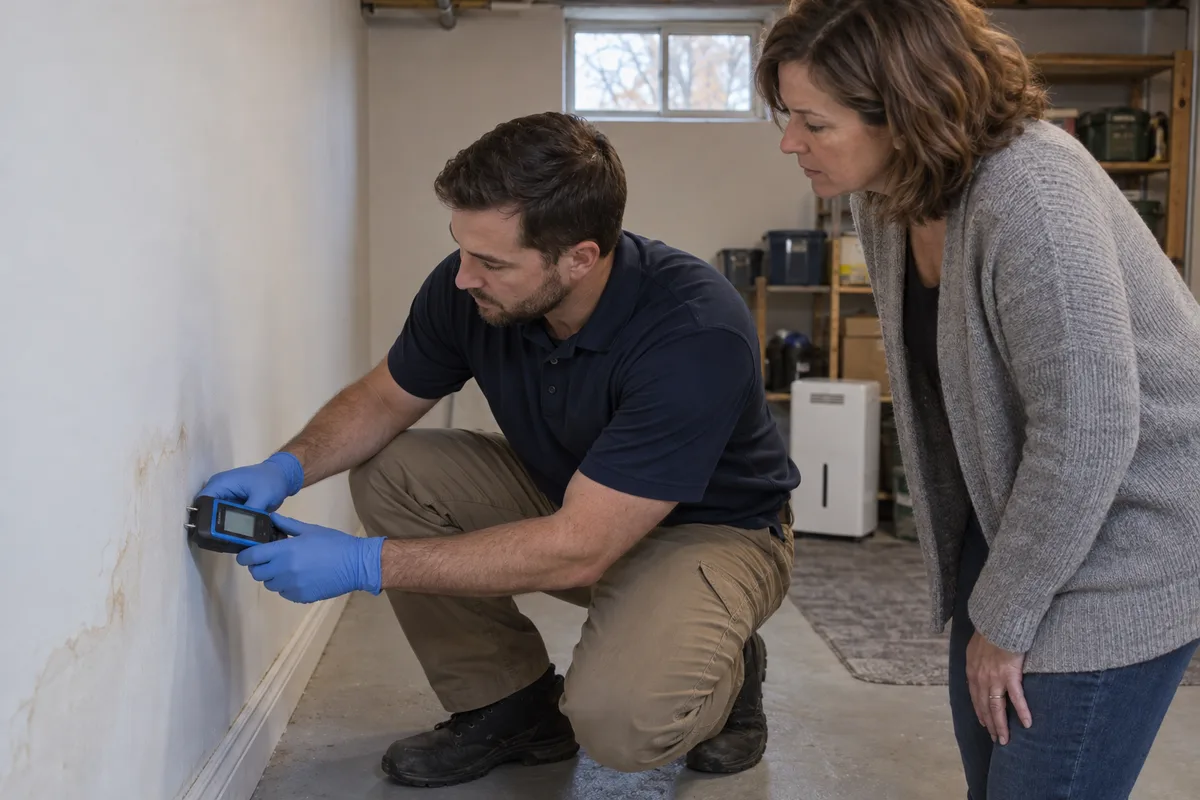
Home air quality testing at a glance
In one sentence: a certified inspector checks your home for moisture and suspect materials, samples the air or the material where the check points, an accredited lab analyzes it, and you get a written report on mold, asbestos or formaldehyde.
Last updated: 6 November 2026
Most home air quality testing calls start with a smell, a stain or a cough
The basement smells musty no matter how often you run the dehumidifier. A brown mark on the drywall comes back after you paint over it. Someone in the family coughs at home and feels fine at work. You’ve read enough online to be worried, and not enough to know what to do.
These are the reasons homeowners call us most often:
- A musty or “off” smell that airing out doesn’t fix. If you can’t find where it’s coming from, an odour inspection is a good place to start.
- Visible mold, water stains or windows that fog up again and again.
- Allergy or breathing symptoms that ease when you leave the house.
- A flood, burst pipe or roof leak, even a small one that seemed to dry out.
- A renovation coming up in a home built or last renovated before 1990.
- New floors, cabinets or furniture and a chemical smell that won’t fade.
- A purchase or sale, when you want a baseline before closing (see our guide to testing during a real estate transaction).
But Health Canada doesn’t recommend an air test for every home, and we agree with most of that
Health Canada says that in most situations it does not recommend testing the air for mould. A small patch on a window sill is a job for a sponge and a dehumidifier, not a lab. If you can see the mold and you know where the water came from, fix the water and clean it up.
A test earns its price when the question is still open. Health Canada names that case too: concerns that stay unexplained after a moisture and mould inspection, especially after flooding or a roof or pipe leak that may have reached the wall cavities. Asbestos works the other way round. Health Canada says some homes built before 1990 contain it, that it poses no significant risk if left undisturbed and in good condition, and that suspect materials should be tested by a professional before you renovate.
Myth An air test tells me whether my family is safe.
Fact It tells you what was in the air, and whether it’s higher than outside. Health Canada says an air test can’t predict health effects, so bring the report to your doctor if someone has symptoms.
Myth If the house looks clean, the air is fine.
Fact Mold can grow behind a finished basement wall where no one sees it. That hidden case is exactly where an air test helps.
Myth Asbestos was banned, so my house doesn’t have any.
Fact Canada’s 2018 ban covers products sold today. A ceiling or floor tile from 1975 is still in the house until someone tests it.
So home air quality testing starts with an inspection, then a sample where it points
-
1
When you call
We ask what you’re noticing
Where the smell or stain is, how old the house is, any past leaks, and what you’re planning. There’s no point sampling for asbestos in a 2015 build, so you only pay for samples that answer your question.
-
2
Day of the visit
The inspector checks the house
Moisture readings on the walls and floors you’re worried about, a look at the basement, attic access and mechanical room, and a list of suspect materials if you’re renovating.
-
3
Day of the visit
Samples where the check points
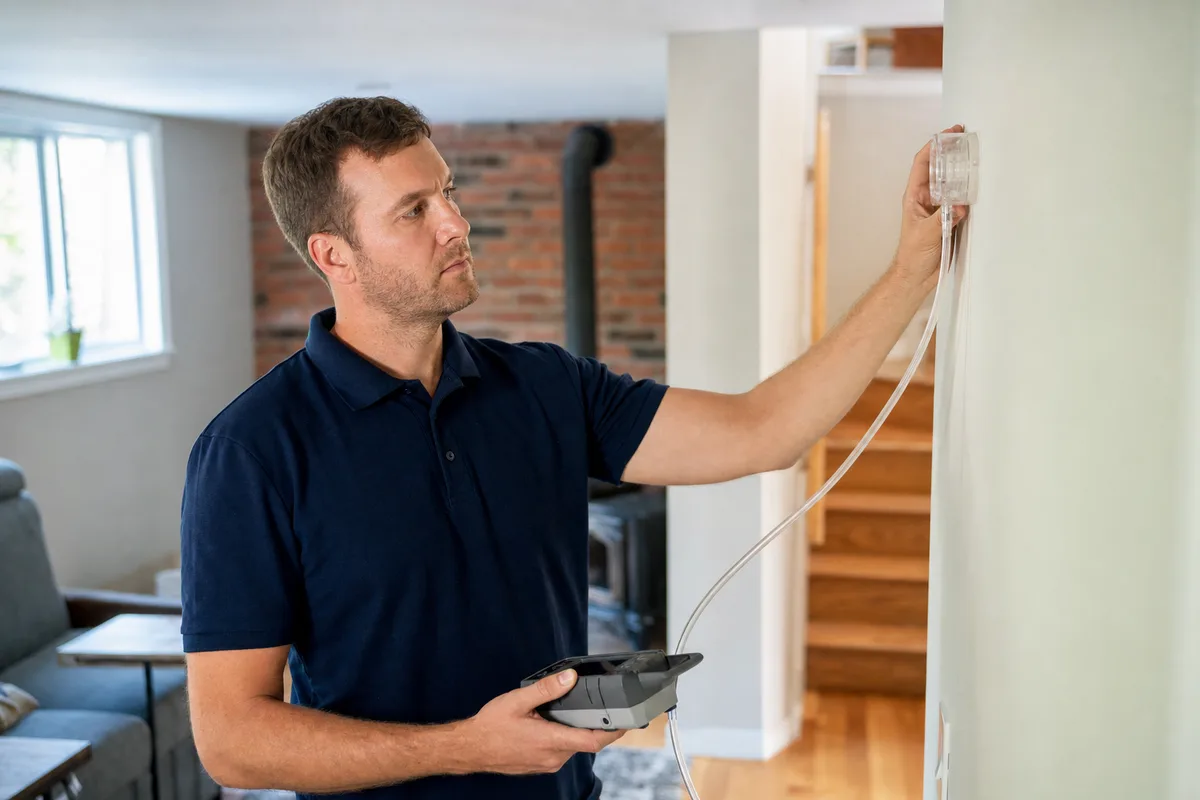
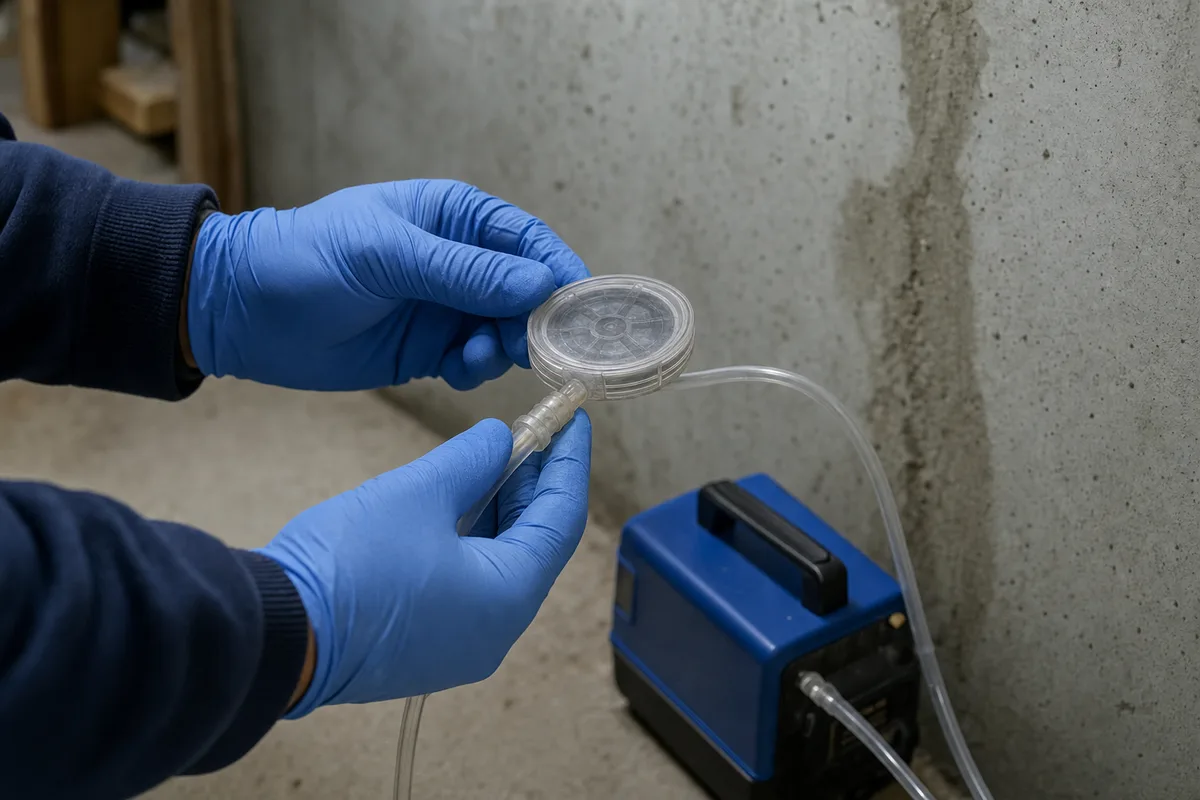
An air sample in the problem room plus one outdoor sample for comparison, a small piece of each suspect material, or a formaldehyde badge. Each sample is sealed and logged for the lab.
-
4
Within 1 business day, then lab results
A written report, then the lab numbers
The inspection report says what the inspector found and where. Lab results follow (mold 2 to 5 business days, asbestos 3 to 4), and we explain them in plain language. See what to expect during an inspection.
Tell us what’s going on and we’ll tell you what to test.
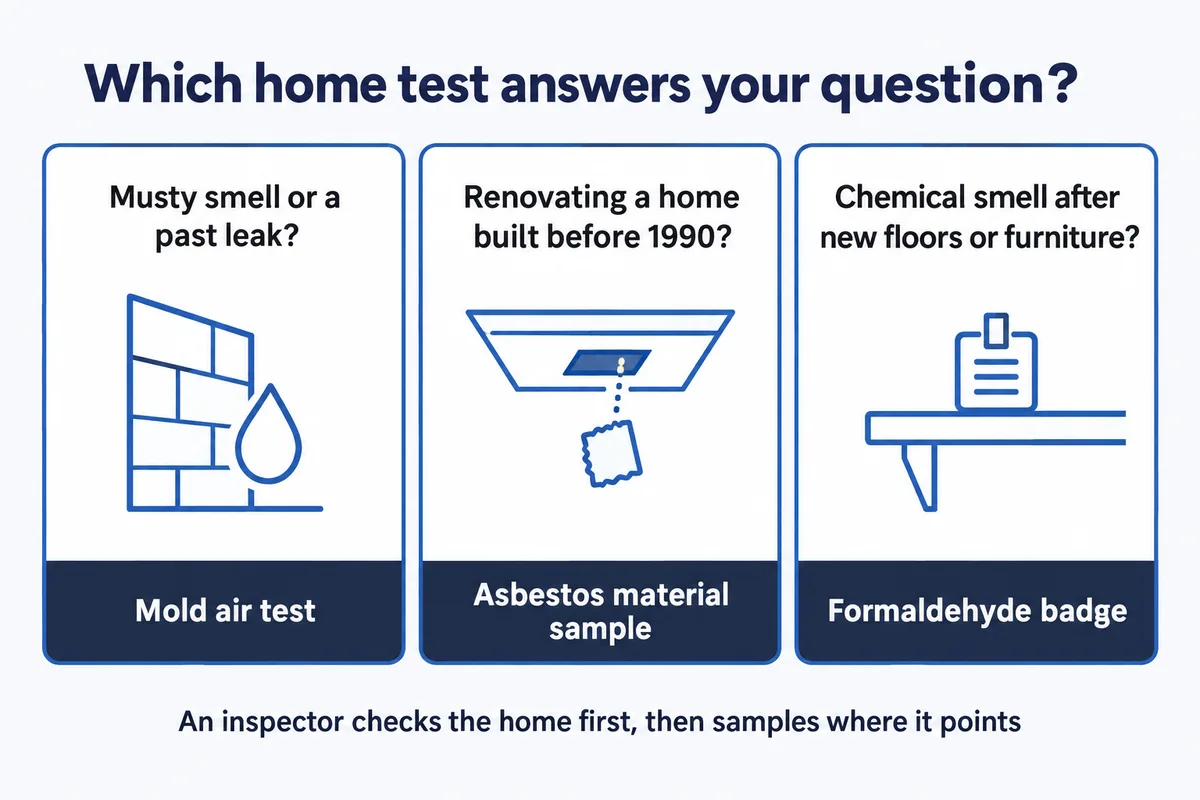
That’s why your home air quality test depends on your question: mold, asbestos or formaldehyde
We keep the list short on purpose. These three cover most of what we find in Ontario and Quebec homes, and each one has a lab method that gives a clear answer.
Mold
An air sample in the problem room is compared with one taken outside the same day. The lab names the mold types and counts them, so you know whether the house has a source of its own. More on our mold testing.
Asbestos
Before you scrape a popcorn ceiling, lift old floor tile or open plaster walls, we cut a small piece of each material for the lab. The report says whether it contains asbestos and how much. More on our asbestos testing.
Formaldehyde
A lab badge hangs for 24 to 48 hours after new floors, cabinets or furniture. The result is compared with Health Canada’s guideline: 123 µg/m³ over 1 hour and 50 µg/m³ over 8 hours.
But a home air quality monitor can’t do what a lab test does
Consumer monitors have come a long way, and for a few hundred dollars they’re a fair buy for watching humidity and general trends in one room. Plenty of our clients keep one running between tests. What a monitor can’t do is name a mold type, find asbestos in a ceiling or give you a report you can hand to a contractor or an insurer.
Home monitor
Is something changing?
- Tracks humidity and general trends, day to day
- One room at a time
- Can’t identify mold or detect asbestos
Lab test
What is it, and how much?
- Names mold types and compares indoor with outdoor air
- Confirms asbestos in a material under a microscope
- Written report with a chain of custody
Our take: use a monitor to notice a change, and a lab test to find out what it is. Our guide to the best air quality testing kits covers the monitors worth buying.
Either way, home air quality testing cost depends on the samples, not the size of the house
We charge per sample, plus tax. The inspector’s visit, the lab analysis and the written report are inside the price, and we confirm your total before anything is booked.
| Service | Price (CAD, plus tax) | What’s included | Best for |
|---|---|---|---|
| Mold air test | $550 | Inspection, 1 indoor air sample, a free outdoor sample, lab analysis, written report | One room you’re worried about |
| Each extra room | $260 | Another air sample in the same visit | A basement and a bedroom, for example |
| Asbestos, first material | $430 | Sampling, accredited lab analysis, written report | A popcorn ceiling before you scrape it |
| Asbestos, each extra material | $250 | Another material sampled in the same visit | Renovations that touch ceilings, floors and walls |
| Formaldehyde | $350 with a visit, $595 on its own, $295 per extra room | Lab badge, 24 to 48 hours in the room, lab analysis | New floors, cabinets or furniture |
| Visual inspection only | $95, written report $155 extra | A walk through with an inspector, no lab samples | A first look before you decide on testing |
One room
A musty basement, with the outdoor sample included.
Two rooms
The basement and the bedroom where someone sleeps badly.
Before a renovation
Three suspect materials: a ceiling, a floor tile and joint compound.
Most homes need one or two rooms sampled. Call 1-866-528-2897 and we’ll confirm the number for your house. Every price is also in our air quality testing cost guide.
What homeowners say
Real feedback from recent home inspections across Ontario and Quebec
“We just moved into a 1970s house and wanted to be sure the air was safe before unpacking the kids’ rooms. The technician walked us through every sample, what he was collecting and why. Got the full report in four days, and the recommendations were genuinely actionable.”
“My doctor recommended a professional air quality test to help manage my asthma. Three years on, it’s paid for itself in fewer flare-ups. We found a hidden mold issue behind a basement vanity that no DIY monitor would have caught. Polite, thorough technicians who answer every question.”
“Skeptical going in. The price was fair but I half-expected a sales pitch, and got the opposite. The technician spent an hour, packed up, and said ‘we’ll see what the lab finds, you may not need anything done.’ Recommended a small ventilation fix, no remediation, no upsell. Recommend without reservation.”
“Persistent odours in the basement that wouldn’t clear. The team came out within the week, tested for mold, and explained the lab report in plain English so I could share it with my insurer. They traced it to an old foundation crack letting moisture in. Five stars.”
Even a clean report has limits, and we’d rather tell you now
A report answers for the rooms and materials we sampled, on the day we sampled them. A clean basement sample says nothing about the attic, and one negative ceiling sample doesn’t clear a ceiling patched in three different decades. That’s why we agree on what to sample before we start.
An air test also can’t tell you whether the air is making someone sick. If a family member has symptoms, their doctor is the right person to read the report with them. And a test doesn’t fix anything: if we find mold or asbestos, the report says where and what to do next, and a qualified contractor does the work. Our samples go to an accredited third-party lab, so the analyst reading them has no stake in what happens after.
Most of the homes we visit don’t need a big panel of tests. We find where the water is getting in, sample the room that matters, and the lab tells us whether the house has a problem of its own.
 Natasa Maric
Senior Indoor Environmental Inspector
- Since 2005 testing homes in Ontario and Quebec
- 15,000+ inspections
- IICRC Certified
- IAC2 Certified
- IAQA corporate member
We do home air quality testing across Ontario and Quebec
For local detail, see air quality testing in Ottawa, Montreal, Toronto, York Region and Durham, Mississauga and Peel and Oakville, Halton and Hamilton, plus mold testing in Ottawa and asbestos testing in Ottawa, Toronto and Montreal. Testing an office or a rental building? See commercial air quality testing, or every option on our air quality testing services page.
Home air quality testing questions we hear most
With us, a mold air test is $550 plus tax, with the inspection, one indoor sample, a free outdoor sample, lab analysis and the written report included. Each extra room is $260, so two rooms come to $810. Asbestos is $430 for the first material and $250 for each extra, and formaldehyde is $350 added to a visit. The same prices apply in Quebec. Our mold testing cost guide has the details.
Start with what you’re worried about. For a small patch of mold you can see, fix the moisture and clean it, as Health Canada advises. For a smell or symptoms you can’t explain, a past leak, or a renovation in an older house, book an inspection: the inspector checks the house, samples where it points, and an accredited lab reads the samples. Here’s what to expect during an inspection.
For what they’re built to do, yes. A good monitor tracks humidity and general trends in one room, and it can tell you something changed. It can’t name a mold type, find asbestos in a material or give you a lab report. Use a monitor to notice a change, and a lab test to find out what it is.
It’s worth it when there’s a question a lab can answer: a smell or symptoms with no visible cause, water damage that may have reached the walls, or materials you’re about to disturb in a house built before 1990. For a small patch of mold you can see and a leak you’ve already fixed, it usually isn’t. A free virtual inspection helps you decide.
The inspection report comes within 1 business day of the visit. Lab results follow: mold in 2 to 5 business days, asbestos in 3 to 4, and formaldehyde in about 2 weeks, because the badge stays in the room for 24 to 48 hours first. Rush analysis is available for an added fee if you’re working to a closing date.
We test for three things: mold, by comparing indoor air with an outdoor sample at an accredited lab; asbestos, by sampling suspect building materials; and formaldehyde, with a lab badge. The inspector also records moisture readings during the visit. You choose what to test with the inspector, so you don’t pay for samples you don’t need.
For most homes, once is enough unless something changes. A new leak or flood, symptoms that start or come back, a renovation in an older house, or a purchase are good reasons to test again. After mold cleanup, a test before the walls close up confirms the air is back to outdoor levels.
Something about the air at home feels off?
Have an inspector check the house, a lab read the samples, and get a written answer before you spend money on fixes. We test, you decide what happens next.
Phone open 24/7 · Inspections Monday to Friday, 8 AM to 5 PM · Response within 1 business day